
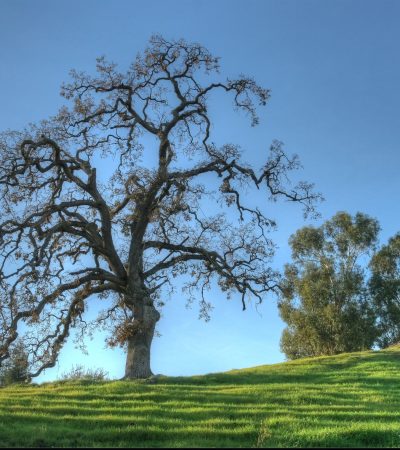
Oak Tree Service in Roseville and Sacramento Valley
Oak trees are among the most ecologically significant and legally protected trees in Northern California. Whether you have a mature Valley Oak shading your backyard in Roseville or a Blue Oak leaning toward your roofline in Sacramento, working with a certified arborist is not just advisable — in many cases, it is required.
At Acorn Arboricultural Services Inc., acorn tree care is more than a name — it reflects our approach. Just as every oak begins with a single acorn, every tree care decision we make starts at the root: understanding the species, the structure, and the specific conditions of your property. We have spent more than fifteen years helping homeowners and property managers across Roseville and Sacramento make sound, well-documented decisions about their oak trees.
Types of Oak Trees (And What They Mean for Your Property)
When you look at a mature oak tree, you’re not just looking at a tree.
You’re looking at decades—sometimes centuries—of growth that started from a single acorn.
That’s not just symbolism. It’s the foundation of what we do at Acorn Arboricultural Services Inc.—helping trees that started small grow strong, stay safe, and remain valuable for generations.
But not all oaks are the same.
And knowing which type you have can make the difference between:
- unnecessary removal
- preventable damage
- or a long, healthy lifespan
Oak Trees – What Every Homeowner Should Know
Oak trees are one of the most iconic and valuable parts of the landscape throughout Roseville and Sacramento. From massive Valley Oaks that have stood for generations to carefully planted varieties in residential neighborhoods, each oak begins the same way—with a single acorn.
At Acorn Arboricultural Services Inc., that connection matters. Our approach to tree care is rooted in understanding how each tree grows, how it behaves over time, and how to protect both the tree and the property around it.
Not all oak trees are the same—and knowing the difference is critical.
Oak trees generally fall into three main categories:
- White Oaks – Known for their strength, longevity, and massive canopies
- Red Oaks – Faster growing, but more prone to structural issues over time
- Live Oaks – Evergreen varieties with dense, heavy canopies that require careful weight management
Each type has its own growth pattern, risks, and maintenance needs.
Understanding which oak you have is the first step toward making the right decision—whether that’s pruning, preservation, or removal.
Native Oak Trees
The Sacramento Valley and Sierra foothills are home to several native oak species, each with distinct growth habits, structural characteristics, and care requirements. Identifying which species you have is the essential first step in determining the appropriate acorn tree care plan for your property.
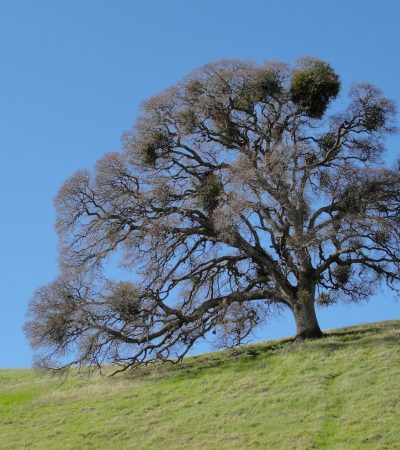
Valley Oak (Quercus lobata)
The king of California oaks.
- Can reach 60–100+ feet tall
- Massive canopy spread (often wider than tall)
- Extremely long-lived (hundreds of years)
Why it matters:
- Often protected by local ordinances
- High-value tree for property aesthetics
- Large limbs = higher risk if not maintained
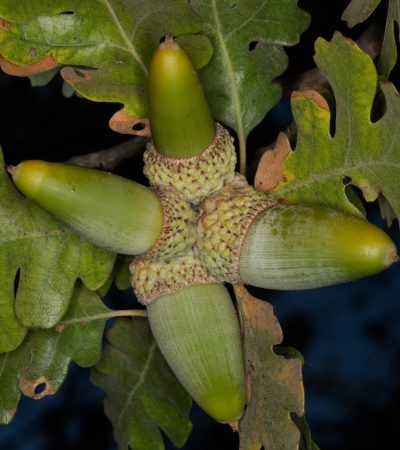
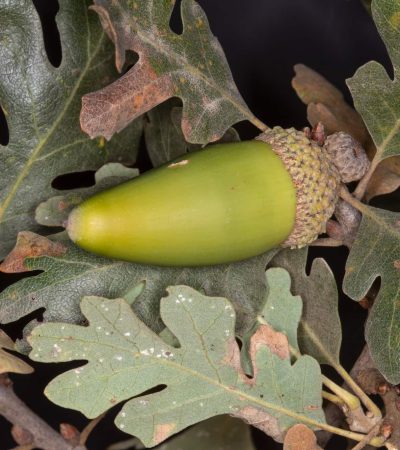
Valley oak acorns
Valley oak (Quercus lobata) acorns are the largest produced by any California native oak, often measuring up to 2 inches long with a slender, conical shape and warty caps. Falling in early autumn (October), these “sweet” acorns are a vital food source for wildlife and were a staple for Indigenous peoples, typically requiring leaching to remove tannins.


Oak Tree acorns — the namesake of Acorn Arboricultural Services and a symbol of long-term tree stewardship.
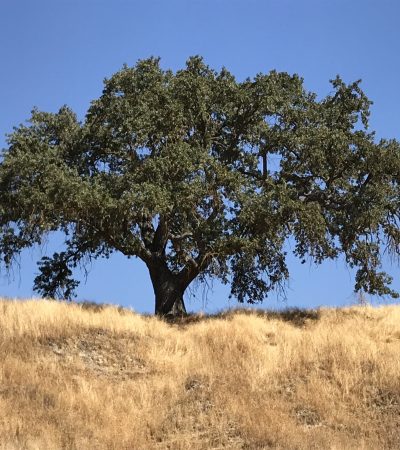
Blue Oak (Quercus douglasii)
Common in the foothills east of Sacramento, the Blue Oak is a drought-adapted species well suited to the region’s dry summers. Blue Oaks are slower-growing and smaller than Valley Oaks, but they are equally valuable ecologically and may carry protection under local ordinances depending on trunk diameter and location.
Interior Live Oak (Quercus wislizeni)
The Interior Live Oak is an evergreen species with a dense, spreading canopy. Unlike deciduous oaks, Live Oaks retain their leaves year-round, which can create significant weight load on major limbs over time. Regular canopy management is particularly important for Live Oaks growing near structures, driveways, or utility lines.
Oregon Oak (Quercus garryana)
Less common in urban settings but present throughout the foothills, the Oregon Oak is a deciduous species valued for its gnarled, picturesque form. It is generally slower to establish but long-lived and structurally resilient when properly maintained.
Why Oak Trees Require Specialized Care
Oak trees are not interchangeable with other landscape trees. Providing proper acorn tree care means accounting for several factors that make oaks categorically different from the typical species managed in residential settings:
- Protected status: In many cities across Placer and Sacramento counties, mature oak trees — particularly Valley Oaks above a minimum trunk diameter — require a permit before any removal can proceed. Pruning work on protected specimens may also require documentation.
- Susceptibility to disease: Some oak varieties in Northern California are vulnerable to fungal pathogens and wood-boring beetles. An arborist assessment can determine if your tree shows early signs of decline.
- Pruning timing matters: Pruning cuts made during certain times of year can expose oaks to pathogens and beetle vectors. Timing and wound treatment matter significantly for oaks in ways they do not for many other species.
- Structural complexity: Mature oaks develop complex branch architecture that requires careful assessment before any work begins. Poor pruning cuts on a large oak can create failure points that take years to manifest — but are entirely preventable.
Warning Signs That Your Oak Tree Needs a Professional Evaluation
Many oak tree problems are progressive. Early identification and intervention consistently produce better outcomes — and lower costs — than waiting until a problem becomes urgent. The following signs warrant a professional acorn tree care assessment:
- Large limbs extending over the roof, driveway, fence line, or neighboring structures
- Visible deadwood or significant canopy dieback
- Cracks, splits, or bark separation in major scaffold branches or the trunk
- A noticeable lean that has developed or changed over time
- Repeated limb failure after storms
- Root zone disturbance from construction, compaction, or grade changes
- Fungal growth at the base of the trunk or on major limbs
- Canopy thinning not consistent with seasonal leaf drop
Not every tree presenting these signs needs to be removed. In many cases, strategic pruning, cabling, or a structured monitoring plan is the most appropriate response. The goal of a professional evaluation is to give you accurate information — not to predetermine an outcome.
Oak Tree Pruning vs. Oak Tree Removal: Making the Right Decision
The decision between pruning and removal is one of the most consequential choices a property owner will make regarding a mature oak. It should never be made without a current, site-specific assessment by a qualified arborist.
Pruning is typically the appropriate choice when:
- The tree is structurally sound overall, with localized issues in specific limbs
- The primary concern is clearance from a structure, utility line, or access point
- Weight reduction on extended limbs will meaningfully reduce the risk of failure
- The tree has significant property value, ecological function, or protected status worth preserving
- A cabling or bracing system can provide adequate supplemental support
Removal may be the appropriate choice when:
- The tree has sustained structural damage that cannot be adequately mitigated
- The primary trunk is compromised by decay, disease, or root failure
- The risk to structures or occupants is disproportionate to the value of retention
- The tree is in terminal decline with no reasonable preservation pathway
- Site constraints make retention impractical despite the tree’s condition

Oak Tree Permits and Arborist Reports in Roseville and Sacramento
Both the City of Roseville and the City of Sacramento have tree protection ordinances that regulate the removal of heritage and protected trees, including native oaks above specified trunk diameters. Regulations vary by jurisdiction and are updated periodically — one reason working with a local acorn tree care company that understands current requirements is important.
In regulated situations, the permit process typically involves submitting a written arborist report documenting the tree’s condition, the basis for the proposed action, and in some cases a mitigation plan. Acorn Arboricultural Services can prepare the documentation required by local agencies and guide you through the submission process.
Proceeding with removal of a protected tree without a permit can result in significant fines and required mitigation plantings. We recommend contacting us before making any decisions about a mature native oak on your property.
Our Oak Tree Services
Acorn Arboricultural Services provides comprehensive acorn tree care for residential and commercial properties throughout Roseville, Sacramento, and surrounding communities:
- Structural pruning and canopy management
- Clearance pruning from structures, rooflines, and utility lines
- Weight reduction and deadwood removal
- Hazard tree evaluation and risk assessment
- Cabling and bracing for structurally compromised limbs
- Oak tree removal, including technical rigging near structures
- Stump grinding following removal
- Arborist reports for permit applications and insurance documentation
- Permit guidance and agency coordination
- Long-term tree health and preservation planning
Serving the Greater Roseville and Sacramento Area
We provide professional acorn tree care services throughout Placer and Sacramento counties, including Roseville, Sacramento, Granite Bay, Folsom, El Dorado Hills, Lincoln, Citrus Heights, Orangevale, and Elk Grove. If you are unsure whether your property falls within our service area, contact our office directly.
Request an Oak Tree Evaluation
If you have concerns about a mature oak on your property — whether it involves structural risk, clearance, declining health, or a potential removal — the right starting point is a professional evaluation from a trusted acorn tree care specialist.
Our certified arborists will assess the current condition of the tree, explain your options clearly, and provide a written estimate for any recommended work. There is no cost to request an estimate.
Call us at (916) 787-8733 or submit a request online to schedule your oak tree evaluation in Roseville or Sacramento.

Frequently Asked Questions About Oak Tree Service
Do I need a permit to remove an oak tree in Roseville or Sacramento?
In many cases, yes. Both cities have ordinances protecting native oaks above certain size thresholds. The specific requirements depend on the species, trunk diameter, and location. As your local acorn tree care provider, we can help you determine what applies to your tree and assist with the permit process if required.
Can an oak tree be pruned instead of removed?
Often, yes — and in our experience, a well-timed pruning is frequently the better long-term choice. Whether pruning is the right option depends on the tree’s overall structural condition and the nature of the problem. A site assessment will give you a clear answer.
Is there a best time of year to prune oak trees?
Yes. Oaks are generally best pruned during the dormant season — late fall through early spring — to reduce the risk of pathogen entry and beetle activity. In some situations, emergency or clearance work may be necessary outside of that window, in which case proper wound treatment is applied.
What are the warning signs of a dangerous oak tree?
Large deadwood, visible cracks in major limbs or the trunk, canopy dieback, recurring limb failure, and signs of root damage or fungal growth are all indicators that a professional evaluation is warranted. When in doubt, contact an acorn tree care specialist rather than waiting.
How often should a mature oak be evaluated?
We recommend a professional evaluation every three to five years for mature oaks near structures, and more frequently if the tree has known health issues or has sustained storm damage. Annual monitoring is appropriate for trees on a formal cabling or bracing program.
How much does oak tree service cost?
Pricing depends on the size of the tree, site access, proximity to structures, equipment requirements, and the scope of work. Pruning a well-accessed mid-sized oak is a very different project from removing a 90-foot Valley Oak over a driveway. We provide written estimates after an on-site assessment so there are no surprises.
Schedule Your Oak Tree Evaluation
Every oak tree tells a different story—and the earlier you understand yours, the more options you have.
Whether you’re dealing with overgrowth, safety concerns, or simply want to protect the long-term health of your tree, a professional evaluation can give you clarity and confidence in your next step.
At Acorn Arboricultural Services Inc., we specialize in helping homeowners make smart, cost-effective decisions about their trees—before small issues turn into major expenses.
- Identify your oak species
- Evaluate safety and structural risk
- Determine pruning vs. removal
- Navigate permits if required
- Build a long-term care plan
👉 Contact us today to schedule your oak tree evaluation in Roseville or Sacramento.
From Root to Canopy, We Deliver Tree Care That Transforms Your Landscape
Call Us Today for More Information